
Magnetic/Inductive Flowmeter
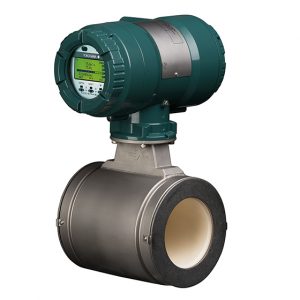
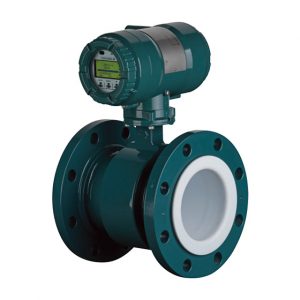
Magnetic flowmeters, often called magmeters or electromagnetic flow meters, use Faraday’s law to measure the flow of conductive liquids. These flowmeters are particularly well suited for applications in water and wastewater treatment, food production, and the chemical industry, where they provide high accuracy and reliability. Magmeters are ideal for processes that require minimal maintenance and offer a long service life, even in demanding environments.
More information
What is a magnetic flowmeter (electromagnetic flow meter)?
A magnetic flowmeter—also often referred to as an electromagnetic flowmeter—measures the volumetric flow of electrically conductive liquids in a pipe. It is based on Faraday’s law of electromagnetic induction and is particularly useful in applications where other measurement technologies struggle to perform, such as with dirty, viscous, or aggressive fluids.
Magnetic flow measurement vs inductive flowmeters - what is the difference?
In practice, there is no technical difference; they are simply two terms for the same measurement technology. “Magnetic flow measurement” describes the principle in which a magnetic field is used to measure the flow of a conductive liquid, while “inductive flowmeter” or “electromagnetic flowmeter” refers to the instrument that applies this principle. Both are based on Faraday’s law of electromagnetic induction: when a conductive liquid moves through a magnetic field, a voltage is induced that is measured and converted into a flow value.
How does a magnetic flowmeter (electromagnetic flowmeter) work?
The instrument generates a magnetic field perpendicular to the liquid flow. When the conductive liquid passes through the magnetic field, a voltage is induced that is proportional to the flow velocity of the liquid. Electrodes in the pipe walls detect this voltage, and the volumetric flow rate is calculated based on known parameters such as the pipe’s cross-sectional area and the velocity of the liquid.
What distinguishes magnetic flux measurement from other measurement techniques?
- Requirement for electrically conductive liquids: works only with liquids that have a certain level of conductivity (e.g. water with salts, acids, sludge), not with non-conductive liquids such as oil or distilled water.
- No moving parts: unlike, for example, turbine or paddle wheel meters, there are no mechanical wear components, which minimizes maintenance.
- High accuracy and repeatability: highly accurate even under varying flow conditions or with particle-laden liquids.
- Not dependent on flow profile: less sensitive to turbulence and pressure variations compared to, for example, differential pressure meters.
Frequently Asked Questions
WHAT IS A MAGNETIC (ELECTROMAGNETIC) FLOWMETER?
An instrument that measures the volumetric flow of electrically conductive liquids in pipes using Faraday’s law of induction. Particularly useful for dirty, viscous, or aggressive fluids.
HOW DOES MAGNETIC/INDUCTIVE FLOW MEASUREMENT WORK?
The meter creates a magnetic field perpendicular to the flow. When a conductive liquid passes through, a voltage is induced and detected by electrodes in the pipe walls. The volumetric flow is calculated based on the liquid’s velocity and the pipe’s cross-sectional area.
IS THERE ANY DIFFERENCE BETWEEN “MAGNETIC FLOW MEASUREMENT” AND “INDUCTIVE FLOWMETER”?
No. “Magnetic flow measurement” describes the principle, while “inductive/electromagnetic flow meter” refers to the instrument that uses this principle.
WHAT ADVANTAGES AND APPLICATION AREAS DO MAGMETERS HAVE?
They require conductive liquids, have no moving parts (minimal maintenance), provide high accuracy and repeatability, and are less dependent on flow profile. Common application areas include water and wastewater, food production, and the chemical industry.